Hey there, it’s Jake from the steel wire spiral hydraulic hose team, and today I’m kicking off a conversation I get at least once a week from new and repeat customers alike: “Are our steel wire spiral hydraulic hoses compatible with all hydraulic fluids?” I’ll cut to the chase—no industry jargon fluff here, since I’ve spent the last 8 years standing next to our manufacturing line, troubleshooting field issues, and working directly with fleet managers, construction rig owners, and industrial plant engineers to answer exactly this question. The short answer isn’t a flat “yes” or “no,” but getting this compatibility right is the difference between a hose that lasts 10 years on a mining site and one that blows out in three months on a farm tractor. Let’s break this down like we’d do over a coffee during a plant walkthrough, no stuffy white papers unless they back up real-world use. Steel Wire Spiral Hydraulic Hose

First, let’s ground this in what steel wire spiral hydraulic hoses actually are, because that’s non-negotiable for understanding compatibility. Unlike rubber hoses with braided wire (one or two layers of crisscrossed wire), spiral hoses use one to four wire layers wrapped tightly in a helical, coiled pattern, crimped securely to steel fittings. That spiral design lets them handle way higher pressure—think 3,000 PSI and up, which is why you see them on heavy construction cranes, forestry skidders, and industrial injection molding machines. The structure isn’t just steel wire and rubber, though. Every hydraulic hose has three core layers: an inner tube that touches the fluid directly, the steel wire reinforcement that takes the pressure load, and an outer cover that stands up to abrasion, heat, and external damage. Compatibility boils down to how these three layers react to whatever hydraulic fluid the system uses.
Let’s start with the most common hydraulic fluids first, because 90% of the systems I encounter use these, and they’re the baseline everyone references. Mineral oil-based hydraulic fluids—yes, the standard ones dyed red or amber for visibility—are actually the sweet spot for most of our steel wire spiral hoses. Our standard hoses, for example, are engineered to handle ISO 6743-4 mineral oils, which is the global industry standard. We test these with real mineral oil for 1,000-hour aging cycles, checking things like inner tube swelling, wire layer corrosion, and pressure retention. I’ll be honest: I’ve got a field note from a customer who used our hoses on a 20-ton excavator running straight mineral oil, and that hose went 14,000 hours before needing replacement—beats the 8,000-hour average for braided hoses. That said, even mineral oils have variations: some have anti-wear additives, some are low-viscosity for cold climates, and a few have seal conditioners that can soften certain inner tubes. Our standard EPDM inner tube works for most mineral oils, but if a customer is using a high-synthetic mineral blend, we’ve modified a nitrile inner tube that’s more resistant to those specific additive sets.
Now, the big curveballs that make compatibility tricky: non-mineral hydraulic fluids. These are the ones that come up as regulations change—construction sites in Europe banning mineral oils to prevent groundwater contamination, food processing plants needing non-toxic fluids, metal stamping operations dealing with high heat that breaks down standard hoses. Let’s go through the main ones we deal with daily.
First, water-glycol fluids. These are the fire-resistant workhorses for high-temperature industrial systems, like steel mill rolling mills or foundry hydraulic presses. A lot of customers make the mistake of grabbing a standard steel wire spiral hose and slapping a water-glycol fluid in it, and then calling us two weeks later with a leaky hose. Why? Because standard inner tubes for mineral oils are made of nitrile rubber, which absorbs water-glycol and swells like a sponge, breaking down the bond between the tube and the wire reinforcement. We’ve solved this with our water-glycol-specific hoses: the inner tube is a specialty chlorinated polyethylene (CPE) that doesn’t react with the 35-50% water/glycol mix, and we use a rust inhibitor coating on the steel wire layers that prevents corrosion from the water content. I saw this work firsthand last year for a large auto parts plant in Detroit—they were switching from mineral oil to water-glycol to meet OSHA fire safety rules, and their old hoses blew out within a month. They switched to our water-glycol rated spiral hoses, and they’ve had zero failures in 18 months of 24/7 operation. That’s the kind of real win I care about.
Next, synthetic hydraulic fluids. This is a broad category, and it’s where most of the compatibility mix-ups happen. Synthetic fluids include polyalphaolefins (PAOs), polyalkylene glycols (PAGs), phosphate esters (esters), and even bi-based synthetics like canola or soy-derived fluids. Let’s break each down because they’re not all the same. PAOs are the most common synthetic, used for extreme cold or extreme heat applications—think Arctic pipeline equipment or desert mining rigs. PAOs are chemically similar enough to mineral oils that our standard nitrile inner tube works for most PAOs, but we always confirm the specific grade with the customer, because some high-performance PAOs have additives that can degrade EPDM over time. Then there are PAGs, which are common in heavy machinery and wind turbine hydraulic systems. PAGs are polar, and they react badly with nitrile rubber—swelling it, making it brittle, and causing leaks. For PAG use, we use a special fluoroelastomer (Viton) inner tube that withstands PAG’s polar structure. I once had a wind turbine tech call me in a panic because their turbine’s hydraulic hose sprung a leak at 2 a.m. in Iowa in February—turns out they’d used a standard mineral oil hose for PAG fluid. We overnighted our PAG-rated spiral hose, and they got the turbine back up and running by morning, avoiding hundreds of thousands of dollars in downtime. That’s the kind of call that makes you make sure every hose is tested for every synthetic it’s rated for.
Then there are phosphate ester fluids, used almost exclusively in aerospace and some high-performance industrial hydraulic systems. These are super corrosive to standard rubber and steel, and they require specialized inner tubes, wire coatings, and even outer covers. Our phosphate ester-rated hoses use a PTFE inner liner and stainless steel wire reinforcement, which stands up to the aggressive phosphate ester chemistry. This isn’t a off-the-shelf hose—we build these to order, with full third-party testing for aerospace specifications, so customers know they’re meeting regulatory requirements. And finally, bio-based hydraulic fluids—these are growing fast, as farms, construction companies, and municipalities push for more sustainable options. Bio-based fluids are usually vegetable oil-derived, and their compatibility depends on the base oil. Most common bio-based fluids are compatible with nitrile inner tubes, but some are too high in fatty acid content, which can cause swelling or brittleness over time. We test every batch of bio-based fluid a customer sends us, and if it’s outside our standard specs, we adjust the inner tube or additives in the hose to make it work. We did this last year for a large grain farm in Iowa that switched to 100% soy-based hydraulic fluid to meet their sustainability goals—their old hoses started cracking after six months, but our bio-rated hoses have been running for 12 months with zero issues.
Wait, let’s not forget the external factors that affect compatibility too—because it’s not just the fluid itself. Pressure rating, temperature range, and even the environment the hose is in play a huge role. For example, if you have a hose rated for water-glycol fluid running in 120°F direct sunlight, the outer cover might degrade faster, even if the inner tube is fine. That’s why every hose we build has a temperature range matched to the fluid it’s using—our standard mineral oil hose works from -40°F to 250°F, our water-glycol hose works from -20°F to 225°F, and our synthetic hoses go even higher, up to 300°F for phosphate ester applications. Pressure also matters: a 4,000 PSI spiral hose has a thicker steel wire layer, which is more susceptible to corrosion from certain fluids than a 2,000 PSI hose. We always specify the right wire gauge and coating based on both the fluid and the system pressure.
Now, let’s talk about the mistakes we see customers make all the time, because avoiding these is what saves you from downtime. The first mistake is assuming all hoses are universal—grabbing a random steel wire spiral hose from a catalog and using it for whatever fluid they have. That’s a one-way ticket to hose failure. The second is not asking us for technical specs. We don’t sell off-the-shelf hoses that fit every scenario—we work with customers to provide a hose matched to their exact fluid, pressure, temperature, and environment. Last year, a customer from Canada called and said their hose wasn’t lasting in a logging operation in northern Alberta. Turns out they were using a standard mineral oil hose for a bio-based fluid that had a high fatty acid content, and it was cracking in the -30°F winters. We swapped them for our bio-rated hose with a modified nitrile inner tube, and now their hoses last twice as long. The third mistake is ignoring batch variations in hydraulic fluid. A fluid manufacturer might change their additive package, or a customer might switch to a different brand of fluid, and that can throw compatibility off. We always recommend that customers share their fluid specs with us, and we test new fluid batches before they run them through their systems, just to be safe.
I should also mention regulatory compliance, because that’s a big one now. A lot of industries have strict rules about what fluids and hoses they can use to meet environmental, safety, or OSHA standards. For example, the European Union’s REACH regulation restricts certain chemicals in hydraulic fluids and hoses, and the FDA has standards for hoses used in food and beverage processing. Our food-grade steel wire spiral hoses are rated for food-safe hydraulic fluids, and they meet all FDA 21 CFR requirements, so food processing plants don’t have to worry about fluid contamination. That’s another layer of compatibility—making sure the hose isn’t just chemically compatible, but also meets the regulatory rules for the application.
Now, let’s get to the practical stuff: how do you make sure your steel wire spiral hydraulic hose is compatible with your fluid? It’s simple, and we make it easy. First, share three key details with us: what type of hydraulic fluid you’re using (brand, base type, additive info if you have it), the system pressure and temperature range, and the application it’s for (mining, food processing, wind turbines, etc.). Second, ask for a compatibility test—we can run in-house tests on small hose samples with your actual fluid, checking for swelling, corrosion, and pressure retention over a 500-hour cycle, which is enough to predict long-term performance. Third, don’t hesitate to call us with questions, even if it’s a “maybe this will work” question. We’re not just hose suppliers—we’re hydraulics experts, and we’ve seen every combination of fluid, hose, and application, so we can help you avoid costly mistakes.
At the end of the day, the question of whether steel wire spiral hydraulic hoses are compatible with different hydraulic fluids isn’t a yes/no answer—it’s a match. You need a hose engineered for your specific fluid, not a one-size-fits-all option. Over the last decade, we’ve built hoses for everything from agricultural bi-based fluids to aerospace phosphate esters, and the common thread is that taking the time to match the hose to the fluid saves our customers time, money, and downtime. I’ve talked to too many operators who’ve lost thousands of dollars because they used the wrong hose, and it’s never worth cutting corners on compatibility.
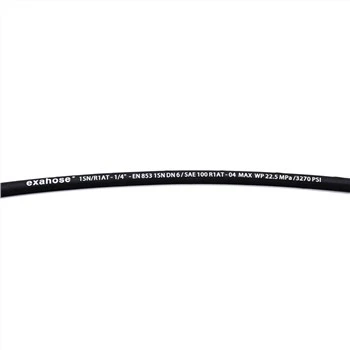
If you’re working on a new project, replacing old hoses, or just have a question about whether your current hose works with your fluid, we’re here to help. We don’t push off-the-shelf hoses that might not work—we build custom-rated hoses, test them rigorously, and stand behind every product we ship. Whether you’re a small farm with a couple of tractors or a large industrial plant with 100 cranes, we can find the right compatibility solution for you. Reach out to our team to discuss your hydraulic hose needs, and we’ll make sure you get a hose that works as hard as you do, no surprises, no failures, just reliable performance.
Textile Braid Hydraulic Hose References
ISO 6743-4:2019, Hydraulic fluids – Classification
SAE J517:2020, Hydraulic hose specifications
ASTM D2000:2021, Rubber classification system for automotive and other applications
OSHA 29 CFR 1910.134:2023, Respiratory protection (relevant to fire-resistant hydraulic fluid systems)
FDA 21 CFR Part 177.2600:2022, Rubber articles intended for repeated use in contact with food
Hebei Qianli Rubber Products Co., Ltd.
As one of the most professional steel wire spiral hydraulic hose manufacturers and suppliers in China, we have world-leading production equipment and strong manufacturing capabilities. Please feel free to buy bulk durable steel wire spiral hydraulic hose made in China here from our factory.
Address: West industrial Zone, Jing County, Hengshui City, Hebei Province, China.
E-mail: manager@hebeiqianli.com
WebSite: https://www.qianlirubber.com/
