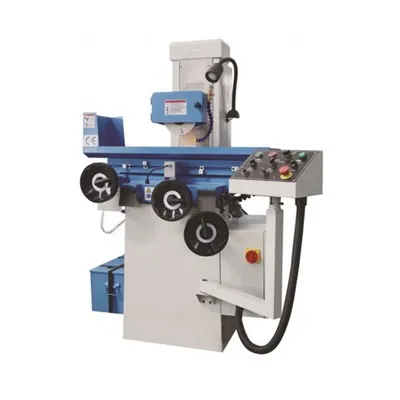
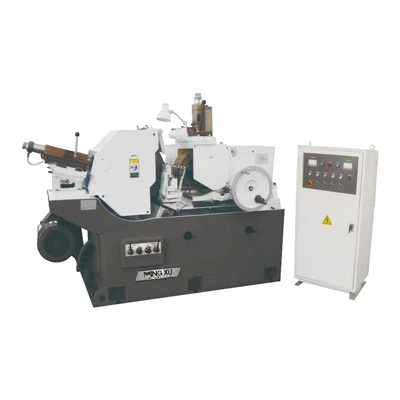
Hey there! I’m a supplier of CNC centerless grinders, and today I want to walk you through the process of calibrating these awesome machines. Calibration is super important as it ensures that your grinder is working at its best, giving you high – quality results every time. So, let’s dig right in! CNC Centerless Grinder
Understanding the Basics of a CNC Centerless Grinder
First things first, it’s good to have a basic understanding of what a CNC centerless grinder is. It’s a type of grinder that can grind the outer surface of a workpiece without having to use the centers, unlike traditional grinders. The main components of a CNC centerless grinder include the grinding wheel, the regulating wheel, and the work rest blade.
The grinding wheel does the actual cutting and shaping of the workpiece. The regulating wheel controls the speed and rotation of the workpiece, and the work rest blade supports the workpiece during the grinding process. All these parts need to be in perfect sync for the grinder to work efficiently.
Pre – calibration Checks
Before you start the actual calibration process, you need to do some pre – calibration checks. This is like warming up before a workout; it helps avoid any major problems later on.
Machine Inspection
Check the overall condition of the grinder. Look for any visible signs of damage, like cracks on the wheels or loose parts. Make sure all the electrical connections are secure. If there are any hydraulic or pneumatic systems, check for leaks. A damaged machine can mess up the calibration process and lead to inaccurate results.
Cleaning
Clean the grinder thoroughly. Remove any dirt, debris, or coolant residue from the grinding wheel, regulating wheel, and work rest blade. Dirt can affect the surface finish of the workpiece and also cause uneven wear on the wheels. You can use a soft brush and a cleaning solution recommended by the manufacturer.
Wheel Inspection
Inspect the grinding and regulating wheels. Check for any signs of wear, such as uneven surfaces or chipping. If the wheels are worn out, they need to be replaced before calibration. You also need to make sure the wheels are properly mounted. A misaligned wheel can cause the workpiece to be ground unevenly.
Step – by – Step Calibration Process
1. Wheel Truing
The first step in calibration is wheel truing. This is the process of making sure that the grinding and regulating wheels are perfectly round and have the correct profile. You can use a diamond dresser to true the wheels.
Start the grinder and run the wheels at a low speed. Then, slowly bring the diamond dresser into contact with the wheel. Move the dresser across the face of the wheel in a smooth, steady motion. This will remove any high spots on the wheel and make its surface smooth and even. Repeat the process for both the grinding and regulating wheels.
2. Wheel Balancing
After truing the wheels, you need to balance them. An unbalanced wheel can cause vibrations, which can lead to poor surface finish and premature wear of the machine components.
There are different methods of wheel balancing. One common method is static balancing. You can use a wheel balancer tool. Place the wheel on the balancer and let it come to rest. If the wheel is unbalanced, it will tilt to one side. You can then add or remove small weights to the wheel until it is balanced.
3. Setting the Work Rest Blade
The work rest blade is crucial for supporting the workpiece during grinding. It needs to be set at the correct height and angle.
The height of the work rest blade should be adjusted so that the center of the workpiece is slightly above the centerline of the grinding and regulating wheels. This helps prevent the workpiece from being pulled down into the gap between the wheels. To set the height, you can use a height gauge.
The angle of the work rest blade should be set according to the type of workpiece and the grinding operation. A common angle is around 15 – 30 degrees from the horizontal. You can use a protractor to measure and adjust the angle.
4. Adjusting the Regulating Wheel Angle
The regulating wheel angle has a big impact on the speed and rotation of the workpiece. To adjust the regulating wheel angle, you need to loosen the locking mechanism on the wheel head.
For most applications, the regulating wheel is set at a small angle (usually around 2 – 5 degrees) to the horizontal. This angle can be adjusted depending on the desired feed rate and the diameter of the workpiece. After making the adjustment, tighten the locking mechanism to secure the wheel head in place.
5. Checking the Clearance between the Wheels
There should be a proper clearance between the grinding wheel and the regulating wheel. This clearance allows the workpiece to pass through smoothly without being pinched.
Use a feeler gauge to measure the clearance. The recommended clearance usually ranges from 0.002 to 0.005 inches, but it can vary depending on the size and type of the grinder. If the clearance is too small, the workpiece may get stuck; if it’s too large, the grinding operation may not be effective.
Verifying the Calibration
Once you’ve completed all the calibration steps, it’s important to verify if the grinder is calibrated correctly. You can do this by running a test piece.
Select a test workpiece that is similar in size and material to the parts you usually grind. Set up the grinder with the appropriate grinding parameters, such as the speed, feed rate, and depth of cut. Then, start the grinding process.
After grinding the test piece, measure its dimensions using a micrometer or a caliper. Check the surface finish using a surface roughness tester. If the dimensions are within the specified tolerance and the surface finish is good, then the grinder is calibrated correctly. If not, you may need to go back and make some adjustments.
Maintenance Tips for a Well – calibrated Grinder
Calibration isn’t a one – time thing. To keep your CNC centerless grinder working at its best, you need to perform regular maintenance.
- Keep it Clean: As mentioned earlier, clean the grinder regularly to prevent dirt and debris from building up.
- Lubrication: Make sure all the moving parts are properly lubricated. This reduces friction and wear, and also helps the machine operate smoothly.
- Regular Checks: Do periodic checks of the wheels, work rest blade, and other components. Replace any worn – out parts immediately.
Why Calibration Matters
Proper calibration of a CNC centerless grinder has a lot of benefits. It improves the accuracy of the grinding process, which means you get parts with better dimensional accuracy. This is crucial, especially in industries where precision is key, like aerospace and automotive.
It also enhances the surface finish of the workpiece. A well – calibrated grinder can produce a smooth and uniform surface, which is important for the functionality and appearance of the final product.
Moreover, calibration can extend the life of the grinder. By reducing vibrations and uneven wear, it prevents premature damage to the machine components, saving you money on repairs and replacements in the long run.
Connect with Us for Your CNC Centerless Grinder Needs
Precision Surface Grinder If you’re in the market for a new CNC centerless grinder or need more advice on calibration and maintenance, we’re here to help. We’ve got a wide range of CNC centerless grinders to suit different needs and budgets. Our team of experts can guide you through the selection process and provide you with all the support you need. Whether you’re a small – scale shop or a large – scale manufacturing facility, we’ve got the right solution for you. So, don’t hesitate to reach out and start a conversation with us about your grinding requirements.
References
- "CNC Centerless Grinding Technology" – A handbook on the latest advancements in centerless grinding.
- Manufacturer’s manuals of various CNC centerless grinders for in – depth information on specific models.
Wuxi Mingxu Machinery Equipment Co., Ltd.
As one of the most professional cnc centerless grinder manufacturers and suppliers in China, we’re featured by quality products and good price. Please rest assured to buy the best cnc centerless grinder for sale here from our factory. Also, custom service is available.
Address: No. 5-5 Jinke Wealth Plaza, Changjiang North Road, Xinwu District, Wuxi City, Jiangsu Province
E-mail: yingyingmxjd@163.com
WebSite: https://www.mingxu-china.com/
