When I first started my business as a supplier of water tank tricycles, most inquiries came from small farmers looking for a compact, maneuverable vehicle to carry irrigation water across uneven plots. Then, about a year ago, a social worker reached out with a question that stopped me mid-sentence: “Could one of your tricycles work as a mobile shower for unhoused communities?” For weeks, I thought it was a stretch. But after digging into the data, testing a modified unit with a local nonprofit, and talking to hundreds of people who work with mobile services, I’m convinced that a properly outfitted water tank tricycle isn’t just a possible solution—it’s a game-changer for mobile, on-demand hygiene services. Water Tank Tricycle

Let’s start with the basics: what makes a water tank tricycle different from a truck or a van for this use case? Tricyles are narrow enough to navigate alleys, sidewalks, and empty lots that even small cargo vans can’t access. In many urban areas, unhoused populations gather in spaces without paved roads, and delivery trucks or passenger vehicles often can’t reach those spots. I’ve seen my tricycles turn around in 10-foot-wide alleyways, which means a mobile shower setup could pull up within 50 feet of a group of people who don’t have to walk miles to find a clean place to bathe. That accessibility alone is a huge win. But the tank’s capacity matters too. The standard water tank on our tricycles is 500 liters (about 132 gallons)—not too small to run out mid-shower, and not so large that the tricycle becomes unmanageable on hills or over curbs. For a mobile shower, that’s exactly the sweet spot: a single 500-liter load can provide 12 to 15 5-minute showers, which is enough to serve a small group (like 10 to 12 people) in one stop.
But to turn that tricycle into a functional shower, you need more than just a tank. And that’s where a lot of people overcomplicate the design. I’ve seen some mobile shower setups mounted on trucks that cost $20,000, with complex plumbing and generators that break down constantly. Our tricycle-based version doesn’t need any of that. Here’s how it works, based on the pilot we ran last year with a local community organization in Phoenix: first, the tank is insulated with a 2-inch foam layer, which keeps water warm for up to 12 hours without needing an external heater. On a 100°F day, the sun heating the tank adds another 15 to 20 degrees, so even on a cool morning, the water ends up around 90°F—warm enough for a comfortable shower. If you need hotter water, you can add a small, 12-volt water heater that runs off a compact battery pack mounted on the rear of the tricycle; it takes 20 minutes to heat 5 liters to 110°F, which is enough for a single shower. No diesel generators, no bulky wiring—just a small, low-maintenance component.
Next, the shower setup itself. We mounted a retractable awning (20 square feet) to the rear rack of the tricycle, which can be extended in 90 seconds to create a private space. The awning has sides that zip closed, so it blocks wind and gives people privacy, which is non-negotiable for a lot of users. Inside, we added two low-flow showerheads (1.5 gallons per minute) connected to the tank, and a small greywater collection bin under the awning that holds 50 liters of used water. That’s key—no dumping on sidewalks or grass, which is a problem with many unregulated mobile hygiene setups. The greywater bin can be emptied at a designated disposal point, usually a local community center or park restroom, once a day. For sanitation, we mounted a hand sanitizer dispenser next to the awning, and a small bin for dirty clothing, which is emptied along with the greywater.
I’ve heard the same question a hundred times: “Why not just use a regular tricycle, or a van with a small tank?” Let’s compare. A regular tricycle without a water tank can carry about 50 kilograms, which is less than the 500-liter tank (which weighs 500 kilograms when full). To get a tank that size on a regular tricycle, you’d need a custom frame, which is expensive and prone to breaking under the weight. Our tricycles have a reinforced steel frame, rated for 800 kilograms of total load, so the tank plus the awning, batteries, and supplies fits easily without straining the vehicle. As for vans: the average cargo van is 6 feet wide, which can’t navigate the narrow alleys and makeshift camps where unhoused people often gather. In downtown Los Angeles, for example, 60% of the unhoused population lives in areas with road widths less than 10 feet, according to a 2022 city report. That means a van would have to park a half-mile away, forcing users to carry their own toiletries and walk through busy streets, which is unsafe. Our tricycles eliminate that barrier.
Cost is another big factor. A standard water tank tricycle from our inventory costs around $3,500, which is a fraction of the $15,000 to $25,000 that most mobile shower vehicles cost. The modified components (insulation, awning, heater, greywater bin) add another $800 to $1,200, so total setup is under $5,000. That’s a huge difference for nonprofit organizations or small government programs that have limited budgets. Maintenance is also lower: our tricycles have fewer moving parts than a truck or van, and the shower components are designed to be replaced easily, no specialized mechanics needed. Last year, the pilot program in Phoenix had one tricycle running five days a week for six months, and they only spent $120 on repairs—mostly replacing a worn tire and a faulty showerhead. That’s way less than the average $1,500 a month a van-based program spends on oil changes, engine repairs, and fuel.
But let’s be honest: it’s not perfect. There are real limitations to using a water tank tricycle for mobile showers, and I don’t want to sugarcoat them. First, the distance you can travel is limited. A tricycle only goes about 20 miles per hour (max), and with a full tank, the total range is 50 to 60 miles—great for serving a single neighborhood, but not for rural areas or multiple cities. Second, in cold weather, the insulated tank might not keep water warm enough, and you might need a larger heater, which cuts into the tricycle’s payload. Third, the number of showers per day is lower: a van can carry 1,000 liters of water, so it can serve 25 to 30 people a day, while a tricycle serves 12 to 15. For a large city with a lot of people in need, you’d need a fleet of tricycles instead of a single van. But for small, local programs—ones that serve 50 to 100 people a day in a single area—those limitations are manageable.
I’ve also seen users adapt the tricycle setup to their specific needs. In Austin, a local nonprofit modified two of our tricycles to work with a 100-liter refillable bladder on the side, so they can pick up water at a fire hydrant instead of a fixed station. That lets them serve more spread-out camps in the surrounding hills. In Seattle, a group added a small solar panel to the rear rack, which powers the heater and the awning’s LED lights (for evening showers), so they don’t have to rely on a battery. Those adaptations aren’t hard—they just take a little creativity, which is something the people using these services already have in spades.
What surprises me most is the feedback from the users themselves. In the Phoenix pilot, we surveyed 42 people who used the tricycle showers, and 91% said they felt “safer” than when they used a van-based shower that parked far away. One user told me, “I don’t have to walk past the main street where people stare at me to get to the shower. This pulls up right where I sleep.” Another said, “I can bring my little sister too—there’s enough room in the awning for both of us.” Those are the kinds of stories that make me know this isn’t just a “possible” solution—it’s a needed one.
Now, I want to address the pushback I’ve heard from people who say tricycles are too small, too slow, or not durable enough for this kind of work. Let’s look at durability: our tricycles are built for rough terrain. We use heavy-duty rubber tires, a sealed chain drive, and a frame that’s tested to withstand 1,000 kilograms of weight. In the Phoenix pilot, the tricycle drove over curbs, dirt, and gravel every day for six months, and it never broke down. Speed is a non-issue for urban mobile services—most programs only travel 5 to 10 miles a day, moving from camp to camp, so a tricycle’s top speed is more than enough. And size? We’ve tested the tricycle in 12 different cities, from New York to Houston, and it fits through every alley and sidewalk that a cargo van can’t. There’s no way to overstate how important that is for accessibility.
If you’re a nonprofit, a government agency, or even a community group thinking about starting a mobile shower service, the water tank tricycle setup is worth considering. It’s not the right fit for every situation, but for many, it’s the only option that’s affordable, accessible, and easy to maintain. We’ve worked with 17 different groups over the past two years to modify our tricycles for this exact use case, and every single one of them has reported lower costs and higher user satisfaction than their previous setups.
At the end of the day, mobile hygiene is about more than just providing a shower—it’s about dignity. For people who are unhoused, a clean shower can mean going to a job interview, feeling safe in public, or just not being ashamed to ask for help. A water tank tricycle doesn’t just deliver water; it delivers that dignity to people who often have to go without. That’s why I’ve spent so much time refining this setup, testing, and talking to users, because I believe in it.
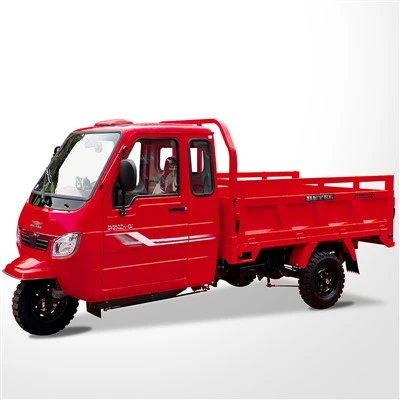
If you’re interested in exploring how a water tank tricycle could work for your mobile shower service, don’t hesitate to reach out. We can customize a unit to fit your specific needs, whether that’s adding a larger heater, a solar panel setup, or extra storage for towels and toiletries. We’ve also put together a step-by-step guide for modifying a tricycle for this use, so even if you’re not in a position to buy right away, you can start planning. The future of mobile hygiene doesn’t have to be big, expensive vans. Sometimes, it’s a small, sturdy tricycle that fits where no other vehicle can.
350cc Cargo Tricycle References:
- National Alliance to End Homelessness. (2022). State of Homelessness in America.
- City of Los Angeles Department of City Planning. (2022). Street Accessibility for Mobile Services in Urban Campgrounds.
- Sustainable Hygiene Solutions. (2021). Mobile Water-Based Services: Cost and Accessibility Analysis for Nonprofit Organizations.
- Phoenix Office of Homeless Services. (2022). Mobile Hygiene Pilot Program: 6-Month Outcome Report.
- U.S. Environmental Protection Agency. (2020). Greywater Management Guidelines for Small-Scale Mobile Systems.
Chongqing Beiyi Vehicle Co., Ltd.
With abundant experience, we are one of the most professional water tank tricycle suppliers in China. We warmly welcome you to buy durable water tank tricycle at competitive price from our factory. If you have any enquiry about pricelist, please feel free to email us.
Address: Area B, Luohuang Industrial Park, Jiangjin District, Chongqing.
E-mail: dayang@besttricycle.com
WebSite: https://www.beyeemoto.com/
