Hey everyone, thanks for swinging by my corner of the web. I’m Jake, and I’ve been selling cylinder printers for almost 8 years now—let me tell you, one of the first questions I get from new folks is, “How much does a cylinder printer cost?” It’s totally fair, right? Whether you’re a small biz owner just testing custom tumblers, a packaging shop scaling up, or someone who’s been researching these things for months, price is usually the make-or-break point. But here’s the thing: there’s no one-size-fits-all number. Cylinder printers aren’t like buying a basic office printer off Amazon—they’re built for specific jobs, and that’s where the cost actually starts to shift. Let me break this down like I’d chat with you over coffee (no sales pitch fluff, promise). Cylinder Printer
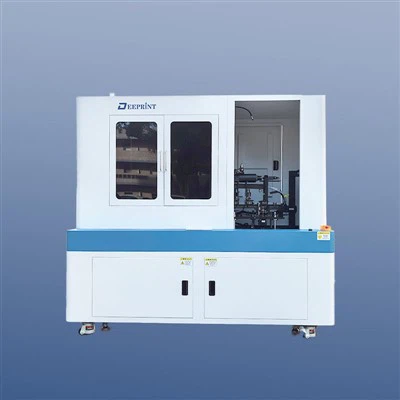
First, let’s get on the same page about what a cylinder printer is, because I’ve had way too many customers mix these up with regular flatbed printers. A flatbed prints on things like boxes or posters that lay flat, but a cylinder printer is made for round, curved surfaces—think tumblers, water bottles, mugs, travel mugs, even small cosmetic containers or kitchen canisters. Some are entry-level for hobbyists, others are industrial-grade for cranking out thousands of pieces a day. That split alone is why the price range is so wild—from like $1,500 to $15,000, and sometimes even more for super custom setups. Let’s start with the entry-level stuff because that’s what most first-timers ask about.
Entry-level cylinder printers are the ones I sell a lot to small business owners, side hustlers, and makers who are just getting their feet wet. These are usually desktop-sized, so they fit on a regular workbench, not a full warehouse floor. What makes them different? They’re made for low-volume runs—like 10 to 50 pieces at a time, mostly for custom gifts, local orders, or Etsy sales. I’ve had customers who use these for wedding tumblers, team merch, or small batch branded water bottles for their local café. How much do these go for? Usually between $1,500 and $3,500. Wait, why the range here? Simple: extras. Some entry-level printers come with a basic rotary attachment, which is what holds the cylinder as it prints, but that’s sometimes an add-on. Others include starter ink bottles (so you don’t have to run out and buy them right away), software that’s easy enough for someone who’s never used a design tool, or a warranty that covers parts for a year. The cheaper ones (around $1,500) might be super basic—you have to calibrate the rotary yourself every time you switch between tumbler sizes, the print speed is slow, and if a part breaks, you might wait weeks for a replacement. The $3,000 to $3,500 entry-level ones have automatic calibration, so you just put the tumbler in, click print, and it adjusts on its own. That’s a huge time saver for someone who’s running multiple orders a day. I always tell new folks: if you’re only doing 10 tumblers a week, save a little and go with the $1,800 option. But if you’re already doing 50 a day and need to keep up, the $3,200 one is worth every penny.
Next up is the mid-range cylinder printer. These are for folks who’ve outgrown the entry-level stuff—maybe you’re getting wholesale orders, or you’re making 100 to 500 pieces a day. I’ve sold these to packaging companies, promotional product vendors, and even small startups that landed their first big client. Mid-range printers are bigger, faster, and built for more consistent, higher-volume runs. They also handle a wider range of cylinder sizes—from tiny lip balm tubes to large 1-gallon water jugs, which is a big plus. What’s the cost here? Usually between $4,000 and $8,000. Again, the range comes down to specs. For example, some mid-range models have a print resolution of 1440 dpi, which means your designs are super crisp, no blurry edges on curved surfaces. Others have a higher dpi (like 2880) for fine details, which is great if you’re printing small text or intricate logos. Speed is another big one: an entry-level printer might print one tumbler every 5 minutes, while a mid-range one can do 2 to 3 per minute. That adds up fast when you’re running 100 pieces—no more staying up till 2 a.m. to meet a deadline. Also, mid-range printers usually come with better support, not just a generic help desk. I work with a mid-range manufacturer that offers 24/7 tech support, so if a customer has a problem on a Friday night before a big order, I can get them help right away, not wait till Monday. Extras here might include an automatic ink system (so you don’t have to refill bottles every week), a built-in dryer, or software that lets you handle bulk orders easily, like uploading 100 tumbler designs at once without manually inputting each one. I had a customer a few months back who bought a mid-range printer for his promotional product business—he was making custom tumblers for a local sports team, and he went from doing 50 a week with his old entry-level to 300 a week in no time. He told me the extra $2,000 he spent was made back in just two months from saved labor. That’s the thing about mid-range: it’s not just about speed, it’s about scaling without burning out.
Then there’s industrial-grade cylinder printers. These are for the big boys—packaging factories, national promotional product brands, companies that are printing thousands of pieces a day. I’ve only sold a handful of these, mostly to clients who’re setting up a whole production line. These aren’t desktop-sized—they’re big, take up a whole corner of a warehouse, and are built to run 12 hours a day without stopping. They handle massive volumes, can print on every type of cylinder surface (metal, plastic, glass, even coated cardboard tubes), and have the highest print quality for large runs. How much are these? It’s way more than most people expect—usually $9,000 to $15,000, and sometimes even higher for fully custom setups. Wait, why so much? Let’s break it down: these printers have robotic loading and unloading, so you can set them up and walk away, no one standing there putting pieces in all day. They have automated quality checks, so if a design is off, it stops printing instead of wasting 50 pieces. The ink system is industrial-grade, which is cheaper per print than entry or mid-range, so when you’re printing 10,000 pieces a month, that adds up to huge savings. Also, they’re built to last—an entry-level printer might last 3 years if you’re hard on it, but an industrial one can go 10+ years with regular maintenance. I had a client in the beverage industry who bought an industrial cylinder printer for their custom bottle line. They were previously outsourcing all their printing, which cost them $0.75 per bottle, with the industrial printer, it’s $0.12 per bottle. Even with the $12,000 price tag, they paid that off in 6 months. That’s the math for industrial: if you’re printing thousands of pieces a day, the cost is nothing compared to what you’d pay outsourcing or dealing with slow, outdated equipment.
Wait, I can’t talk about price without mentioning hidden costs, because that’s where a lot of people get burned. I’ve had customers come to me after buying a cheap entry-level printer from some random online site, and they’re shocked when I tell them the hidden fees. First, ink—entry-level printers use way more expensive ink per milliliter. A mid-range printer might cost $0.10 in ink per tumbler, an entry-level could be $0.50. That adds up. Then there’s maintenance: cheap printers have parts that break easy, and replacement parts can cost hundreds of dollars. Also, software—some cheaper printers use outdated design software that you have to pay to update every year, or it doesn’t work with modern file types. One customer bought a $1,400 printer from a random seller online, and the ink cartridges were only sold by that seller, for $80 each. By the time he added up ink, parts, and software updates, he was spending almost as much as he would have on a decent $2,800 printer from me. That’s why I always tell folks to look at total cost of ownership, not just the upfront price.
Another thing that affects price: customization. Do you need a printer that can print on a specific material? Like, if you’re printing on matte glass vs. glossy metal, some printers have different curing systems (like UV lights vs. air drying) that add to the cost. Or if you need to print extra large cylinders, like 2-liter water bottles, that requires a bigger rotary attachment, which is an extra cost. Some clients also want integration with their existing production lines, like connecting the printer to a conveyor belt, which adds to the setup cost.
Now, let’s get real—should you buy new or used? I get this question a lot, especially from small businesses on a budget. Used cylinder printers can be a good deal, but you have to be careful. I’ve seen used mid-range printers go for $2,500 to $4,000, which is way cheaper than new. But the catch is: no warranty, no support, and you have to make sure it’s not beat up. A lot of used industrial printers are sold when a company downsizes, and those can be a steal if they’re well-maintained. But I always warn people: if you’re new to cylinder printing, buy new. Used might save you money upfront, but if something breaks and you don’t know how to fix it, you’re stuck with a $2,000 paperweight. Entry-level used is especially risky, because the cheap parts wear out fast.
Wait, let’s wrap this up with a quick guide to figuring out what you actually need, so you don’t overspend or buy something too small. If you’re a side hustler doing up to 50 pieces a week, entry-level ($1,500-$3,500) is perfect. If you’re a small business doing 100-500 a day, mid-range ($4,000-$8,000) is the sweet spot. If you’re printing 1,000+ a day, industrial ($9,000+) is worth it. And always ask about total cost of ownership, not just the sticker price.

If you’re still confused about what kind of cylinder printer makes sense for your business, or you want a more detailed quote, hit me up. I don’t do pushy sales stuff—I just give honest advice, even if that means telling you a certain model is too much for you right now. Whether you’re testing the waters or ready to scale, I can help you find something that fits your budget and your needs. No pressure, just real talk.
Bottle Printing Machine References
- Industrial Printer Association. (2022). Global Market Report on Cylinder Printing Equipment.
- Small Business Administration. (2023). Cost Considerations for Custom Manufacturing Equipment.
- Promotional Products Association International. (2021). Guide to Digital Printing for Cylindrical Products.
- TechPrint Solutions. (2022). Maintenance and Longevity of Cylinder Printing Devices.
Shenzhen Deeprint Technology Co., Ltd.
As one of the most professional cylinder printer manufacturers and suppliers in China, we’re featured by quality products and good service. Please rest assured to buy customized cylinder printer made in China here from our factory. Contact us for free sample.
Address: 6-1, Huangwu Road, Tongle Community, Baolong Street, Longgang District, Shenzhen City 518100,China.
E-mail: ellen@uvdprint.com
WebSite: https://www.uvd-print.com/
